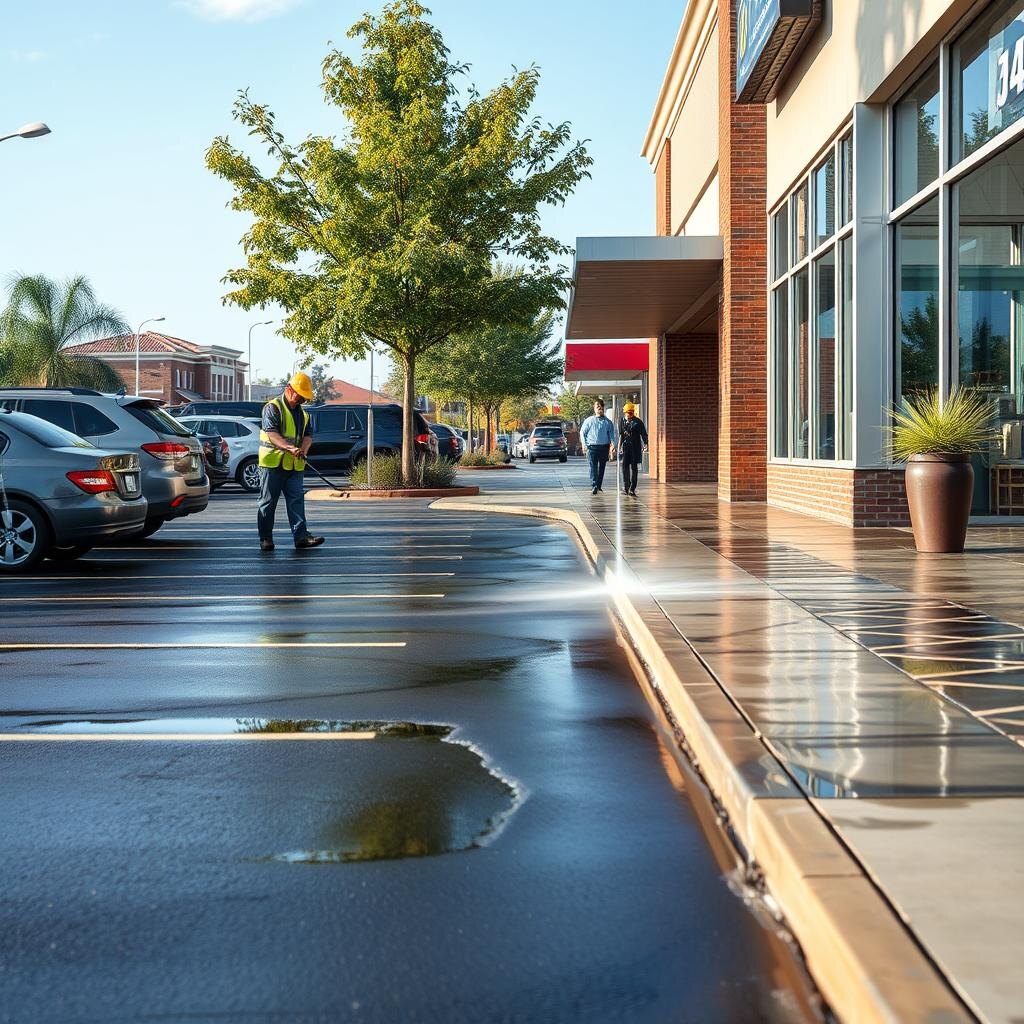
Most pressure washing contractors assume their general liability policy has them covered for whatever goes wrong on the job. For slip-and-falls and accidental property damage, it usually does. But there's one massive exposure that nearly every standard general liability policy specifically excludes — and it happens on almost every job you run: pollution from wash-water runoff. Understanding pressure washing pollution liability insurance is the difference between a covered claim and a five-figure bill you pay out of your own pocket.
The Runoff Problem Every Contractor Faces
When you clean a driveway, a building, or a fleet of trucks, the water doesn't just disappear. It carries everything it strips off the surface — detergents, sodium hypochlorite, oils, grease, paint chips, mildewcides, and debris — and that runoff flows toward the nearest storm drain.
Here's the part many contractors don't realize: storm drains do not lead to a treatment plant. In most municipalities, storm sewers empty directly into creeks, rivers, lakes, and bays — untreated. So when your wash water reaches that drain, you've potentially just discharged pollutants into a waterway.
Why the EPA Cares
Under the federal Clean Water Act, discharging pollutants into "waters of the United States" without a permit is illegal — and that includes discharges through storm drains. The EPA, state environmental agencies, and local stormwater authorities actively enforce these rules. For pressure washing contractors, the high-risk jobs include:
- Commercial parking lots and gas stations (oils, fuel residue, heavy metals)
- Restaurants and dumpster pads (grease, food waste)
- Roof and exterior soft washing (heavy sodium hypochlorite concentrations that kill aquatic life and vegetation)
- Fleet and equipment washing (degreasers, hydrocarbons)
A single complaint from a property owner, a neighbor, or an inspector can trigger an investigation, fines, and a cleanup order.
Why General Liability Won't Save You
This is the trap. Almost every commercial general liability policy contains a total pollution exclusion (or an "absolute pollution exclusion"). It was written into policies decades ago specifically so that insurers would *not* have to pay for environmental contamination claims.
That means when wash-water runoff carrying sodium hypochlorite or oils reaches a storm drain and triggers a claim, your GL carrier can — and almost certainly will — deny it. You could face:
- EPA or state-agency fines and penalties
- Cleanup and remediation costs for the affected waterway
- Third-party damage claims (a neighbor's dead landscaping, a contaminated pond)
- Legal defense costs, which alone can run tens of thousands of dollars
None of that is covered by a standard GL policy. The pollution exclusion strips it out entirely.
What Contractor's Pollution Liability (CPL) Covers
Contractor's pollution liability (CPL) is the coverage built specifically to fill this gap. A CPL policy responds to pollution conditions caused by your operations, typically covering:
- Third-party bodily injury and property damage arising from a pollution event
- Cleanup and remediation costs, including those mandated by a regulatory agency
- Legal defense against pollution claims and government enforcement actions
- Completed operations pollution exposure — claims that surface after you've left the job site
For soft-wash and roof-cleaning operators in particular, CPL isn't a luxury. The volume of sodium hypochlorite these services put on a property makes pollution one of your single largest liabilities.
Best Practices That Reduce Your Exposure
Insurance is your backstop, but smart field practices keep you out of trouble in the first place:
- Block or divert storm drains with mats and berms before you start.
- Use wastewater reclamation — vacuum-recovery systems that capture and contain dirty water for proper disposal, often required on commercial and municipal jobs.
- Neutralize and dilute chemical runoff according to local stormwater rules.
- Know your local ordinances — many cities have specific power-washing discharge regulations.
- Document your compliance on every job; it protects you if a claim arises.
Following these practices not only keeps you compliant — it makes you a far more attractive risk to underwriters and can lower your overall premium.
Protect Your Business with the Right Coverage
If you handle chemicals, soft wash, clean roofs, or work commercial accounts, a general liability policy alone leaves your biggest exposure wide open. Pressure Wash Insurance specializes in coverage for power washing contractors, including contractor's pollution liability built for the realities of runoff and chemical handling. Contact us today for a quote that actually covers the work you do — before a storm drain becomes a five-figure problem.