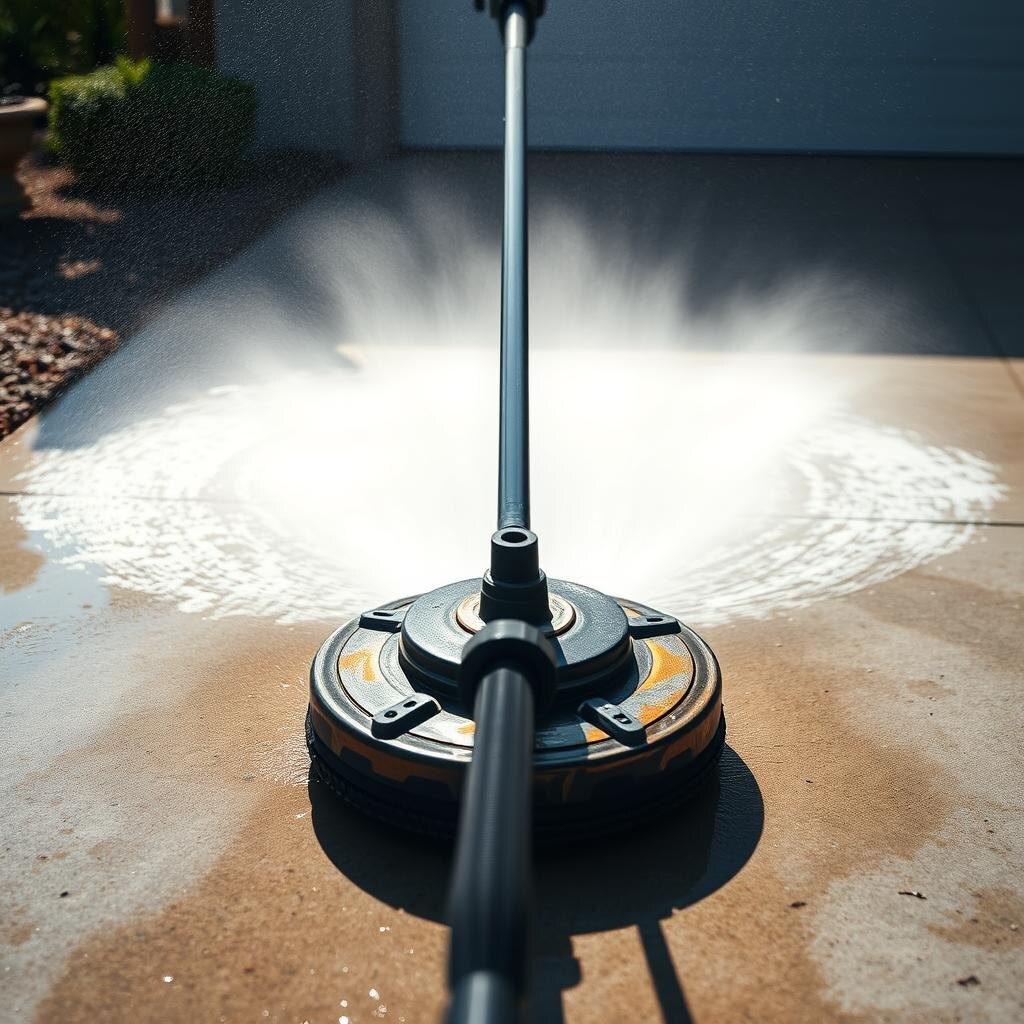
Pressure washing looks low-risk from the curb. You point a wand, the grime disappears, and the customer is thrilled. But behind that satisfying result sits a stream of water hitting surfaces at thousands of pounds per square inch — and that pressure does not discriminate between dirt and the things your client cares about. A single pass at the wrong angle can etch a patio, strip a coat of paint, or drive water somewhere it was never meant to go.
That is why pressure washing general liability insurance is the foundation of every serious exterior cleaning business. It is the policy that stands between an honest mistake and a five-figure repair bill coming out of your own pocket. Understanding what it covers — and just as importantly, what it does not — is the difference between an insured contractor and one who only thinks they are protected.
The Most Common Pressure Washing Claims
Most property damage claims in this trade fall into a handful of predictable categories. If you run a crew long enough, you will eventually brush up against one of them:
- Etched or "burned" concrete. Too much pressure, dwelling too long in one spot, or a surface cleaner held at the wrong height leaves swirl marks, striping, or pitting in driveways, pool decks, and walkways.
- Stripped or peeled paint. High pressure on older siding, trim, or coated surfaces lifts paint right off. What started as a house wash becomes a repaint estimate.
- Broken windows and screens. Direct pressure or a stray rock kicked up by the stream cracks glass or tears screens.
- Water intrusion behind siding. Forcing water upward under lap siding, into weep holes, or around window frames leads to interior leaks, drywall damage, and mold complaints days later.
- Overspray drift. Wind carries your spray — or your cleaning chemicals — onto a neighbor's freshly detailed car, a customer's landscaping, an HVAC unit, or an adjacent building. This is one of the most frequent and most surprising claims because the damage often happens to property you were not even hired to touch.
The common thread is that none of these require negligence to happen. Equipment varies, surfaces are unpredictable, and wind does what wind does. That is precisely the risk general liability exists to absorb.
What General Liability Actually Covers
A standard commercial general liability policy responds to third-party property damage and bodily injury caused by your work. In plain terms, if your operation damages something that belongs to your customer or a bystander, GL is the coverage that pays for the repair, defends you if you are sued, and covers the legal costs even when the claim is questionable.
So when overspray ruins a neighbor's paint job, or your surface cleaner etches a client's stamped concrete, your GL policy is designed to step in — paying for the damage up to your policy limits and handling the dispute on your behalf.
Completed Operations: Why Damage That Shows Up Later Still Counts
Not every problem appears while you are on site. Water intrusion behind siding is the classic example: the homeowner notices a stained ceiling or a musty smell a week after you have packed up and left. This is where completed operations coverage matters.
Completed operations is the part of your GL policy that responds to property damage arising from work you have already finished. Without it, a claim filed after the job is done could be denied. When you are comparing quotes, confirm that completed operations is included and not stripped out to lower the premium — it is one of the most valuable pieces of the policy for a trade where damage frequently surfaces after the fact.
What General Liability Does Not Cover
This is where contractors get burned, so read carefully. GL is broad, but it has hard edges:
- Intentional damage. If you deliberately cause harm, no policy responds. That is by design.
- Faulty workmanship — your own work product. GL generally will not pay to redo the cleaning itself. If you simply did a bad job and the customer wants it done again, that is a quality dispute, not a covered loss. GL pays for the *resulting* damage to *other* property, not for re-performing your service.
- Care, custody, and control. This is the big one. Most GL policies exclude damage to property in your care, custody, or control — meaning the very item or surface you were hired to work on. If you etch the exact driveway you were cleaning, a standard GL policy may treat that as your "work product" and decline the claim, even while it would happily cover the neighbor's car. To close that gap, you need a policy endorsement specifically designed to cover damage to the property you are servicing. Ask your agent about this directly — it is one of the most misunderstood exclusions in the trade.
- Your own equipment. Damaged or stolen pressure washers, surface cleaners, and trailers are not a GL matter. That belongs to a tools and equipment or inland marine policy.
Certificates of Insurance for Commercial Clients
Once you move beyond residential driveways into commercial work — property management companies, retail centers, HOAs, municipalities — you will be asked for a certificate of insurance (COI) before you set foot on the property. The COI is a one-page proof that your GL policy is active, showing your coverage limits and policy dates.
Commercial clients frequently require minimum limits (often $1 million per occurrence) and may ask to be named as an additional insured on your policy, extending your coverage to protect them if your work causes a claim on their property. Being able to produce a clean COI quickly is often what separates the contractor who lands the contract from the one who gets passed over.
Protect the Work, Protect the Business
Overspray and property damage are not edge cases in pressure washing — they are the everyday risks of pushing high-pressure water across surfaces you do not own. A well-structured general liability policy, with completed operations included and the care-custody-and-control gap addressed, keeps a routine mistake from becoming a business-ending expense.
If you are not certain exactly what your current policy covers — or whether it covers the surface you are standing on right now — let's fix that. Pressure Wash Insurance specializes in coverage built specifically for pressure washing and exterior cleaning contractors. Get a fast, no-obligation quote today and find out what real protection costs, before the next job teaches you the hard way.